BMI Calculator
A simple number. One piece of the picture.
Calculate your Body Mass Index using metric or imperial measurements. Explore standard adult BMI categories and understand what your result can—and cannot—tell you.
📏 Enter your measurements
💡 Measure your height without shoes and use your current weight. The result is calculated immediately as you change the values.
🧠 Understanding BMI
BMI is calculated using weight relative to height. It is a widely used screening measure, but it does not distinguish between muscle, fat and bone mass.
This calculator uses standard adult BMI classifications for people aged 20 and older. It is not intended for children, teenagers or use as a pregnancy-related weight assessment.
BMI interpretation may differ depending on body composition, age, ethnicity and medical circumstances. A healthcare professional can provide more individualized guidance.
🧠 How to calculate BMI
Body Mass Index (BMI) is calculated by dividing weight in kilograms by height in metres squared.
For imperial measurements, pounds are converted to kilograms and feet and inches are converted to metres before applying the same formula.
🧮 Example: Calculating BMI
Suppose an adult weighs 75 kg and is 175 cm tall.
Convert the height to 1.75 metres, then divide 75 by 1.75 squared.
This falls within the standard adult BMI category labelled healthy weight. That classification alone does not establish an individual’s health status.
💚 What are the standard adult BMI categories?
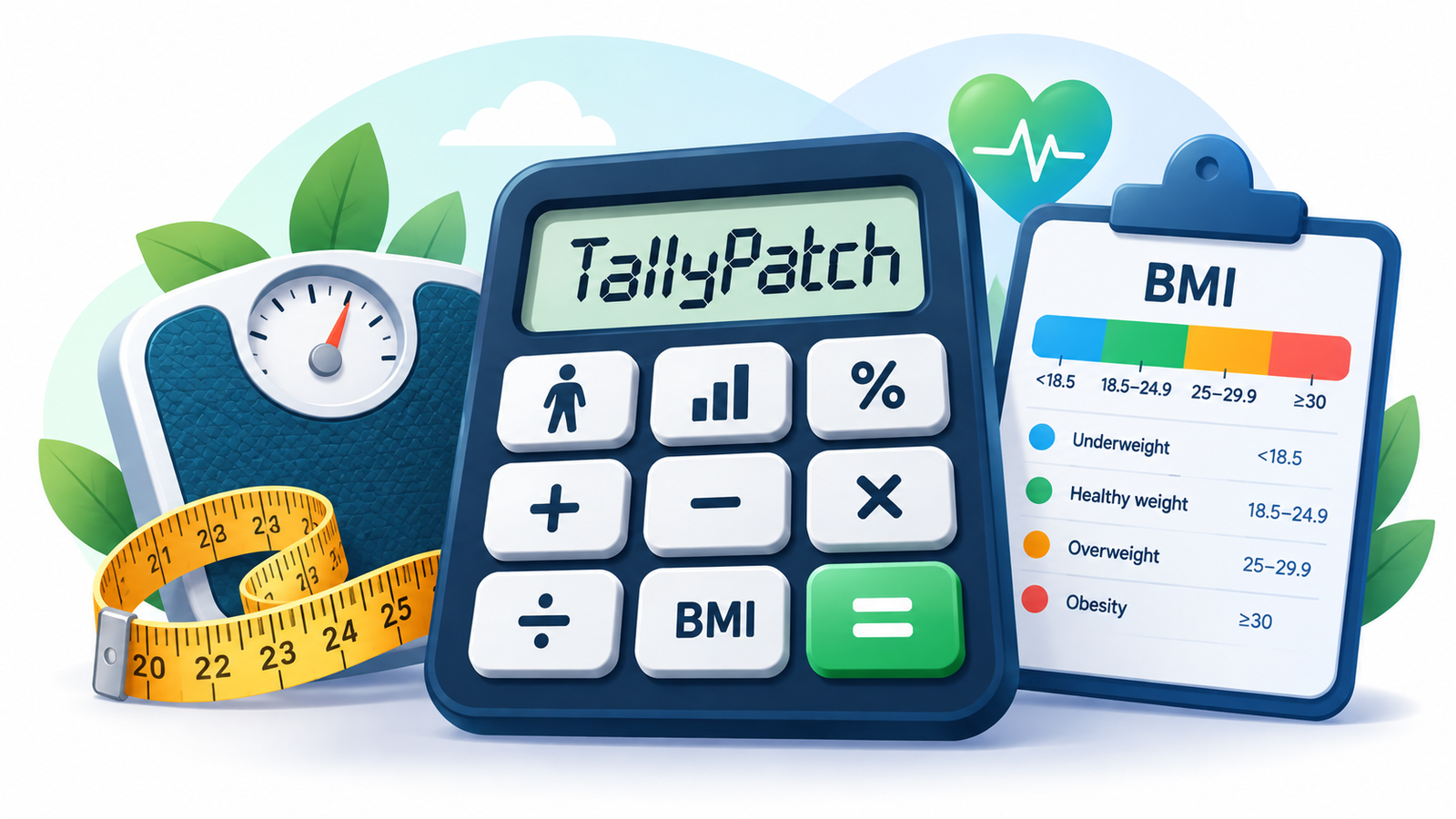
The commonly used adult BMI reference categories are underweight (below 18.5), healthy weight (18.5 to less than 25), overweight (25 to less than 30) and obesity (30 or above).
These categories are population-level screening references. They are not equally informative for every individual and should be considered alongside other health information.
💡 Frequently Asked Questions
Body Mass Index is a measurement based on height and weight. It is commonly used to screen for weight-related health risks in adults, but does not directly measure body fat.
The standard adult reference category is 18.5 to less than 25. However, this is not a personalized health target, and BMI alone cannot determine whether someone is healthy.
Yes. BMI does not distinguish muscle from fat, so people with substantial muscle mass may have a high BMI without having the same body-fat level as others with that BMI.
Children and teenagers require age- and sex-specific BMI-for-age growth references. This calculator uses adult categories and is intended for people aged 20 and older.
No. Other factors, including medical history, body composition, blood pressure and laboratory measurements, may be important. BMI should be considered as one part of a broader assessment.
Standard adult BMI categories are not designed to interpret weight changes during pregnancy. Pregnancy-related weight guidance should be individualized with a healthcare professional.